THAT GENIUS MUST DIE /
by Vittorio Bongiorno
published in Il Foglio, November 14, 2026
- translated with AI -
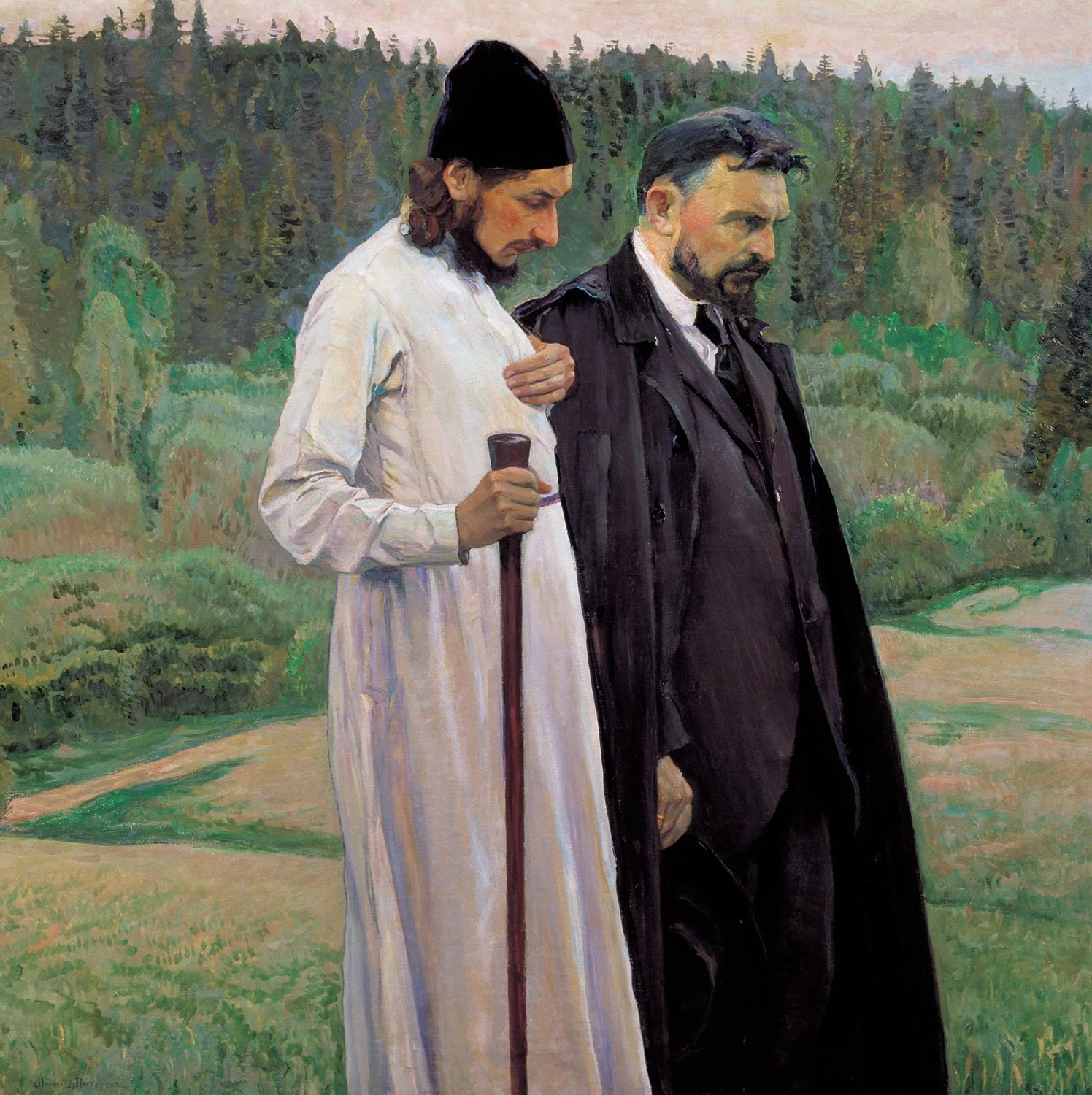
Mikhail Nesterov, ritratto di Pavel Florenskij e Sergei Bulgakov
In Euclidean geometry, two parallel lines never meet. Yet in the mind of Pavel Florensky—scientist, philosopher, and Russian Orthodox priest—the two lines meet at infinity, at a point that is none other than God. His lifelong studies—spanning religion, science, mathematics, and art—revolve around this insight. But in 1937, the Soviet regime, accusing him of a counterrevolutionary plot that never existed, sentenced him to death at the age of just 55 with a bullet to the back of the head.
Recounting the life of this Russian Leonardo da Vinci and confining it to the two-dimensionality of a page is a rather daunting task, given the vastness of his knowledge and the breadth of his cultural, literary, theological, mathematical, and even aesthetic interests. To honor his memory, the Venice Biennale has organized, as part of the second edition of the “Biennale della Parola”, a series of five theatrical evenings titled “The Pillar and Ground of Truth,” running from November 16 to 20. The production features a script and direction by Antonello Pocetti, music by Filippo Perocco, performances by actors Dario Aita and Alessio Vassallo, and sophisticated set design by Leonardo Sonnoli.
Pavel Aleksandrovich Florensky was born in 1882 in what is now Azerbaijan but moved with his family immediately to Tbilisi, Georgia. A scholar from a young age, at 17 he read Tolstoj’s “A Confession” and experienced a spiritual crisis that led him to write a stern and passionate letter to the great novelist—a letter that in all likelihood never reached its destination. Scholars believe the letter’s content was an accusation, in which the tormented young man sought advice from the heretical count on how an intellectual might navigate the “abyss of contemporary consciousness.”
Florensky probably criticized Tolstoj—whom he nevertheless regarded as a fellow sufferer—for the excessive moralism of his religious conversion. “It is likely that in that letter Florensky expressed his skepticism regarding the possibility of eradicating evil simply through good deeds and one’s own orientation toward the good,” Silvano Tagliagambe, a philosopher and physicist who is among the leading experts on the Russian thinker’s work, tells “Il Foglio”. In Russian culture, there was a significant debate between Tolstoj’s position and that of Dostoevsky, which was instead based “on the idea of an irrepressible struggle between good and evil that unfolds within the human heart, and on which the future of humanity depends,” Tagliagambe clarifies. He adds that, for Florensky, the root of all sin lies “in the exaltation of the self, of individuality, and thus in the denial of the importance of the relationship with others, which is constitutive of the person.”
If Pavel Florensky’s biography were limited to these major philosophical imperatives, it would be easy to recount, but that is not the case. The young scholar first enrolled in the Faculty of Physics and Mathematics at Moscow University, where he graduated in 1904 with a thesis titled “On the Particularities of Plane Curves as Places of Discontinuity.” It is interesting to note that the twenty-six-year-old Albert Einstein presented his theory of “Special Relativity” in 1905 and that of “General Relativity” in 1915, and although there was never any connection between the great scientist and the young scholar, the Russian studied the theory of relativity in depth to adapt it to his own purpose: to establish a dialogue between pure mathematics, relativity, and theology. He attempted this in 1922 in his treatise “Imaginary Numbers in Geometry,” where he analyzed the cosmological structure of the Divine Comedy by applying Einstein’s physical models of spacetime: how do Dante and Virgil, having reached the center of the Earth to meet Lucifer imprisoned in ice, manage to escape from Hell and reach Purgatory? In a stroke of genius that would put even director Christopher Nolan’s wildest visions to shame, Virgil turns himself upside down and, where he was previously descending, begins to ascend, traveling in the opposite direction. Dante is bewildered but follows suit, experiencing that reversal of gravity in a curved space that closely resembles a Möbius strip—or the finale of Nolan’s “Interstellar”. In 1908, Florensky earned his degree in theology, rejecting a prestigious academic career and taking his vows. In 1910, he married Anna Giacintova, and in 1911, he was ordained a priest.
“The law of identity is an absolute monarch,” writes Florensky in the book The Pillar and Ground of Truth, “but its subjects do not protest against its autocracy simply because they are bloodless spectres, devoid of real existence; they are not people but merely rationalistic shadows of people. This is Sheol, the realm of death.”
Although in the early years following the October Revolution Comrade Vladimir Ilyich Ulyanov—known as Lenin—was initially tolerant of intellectuals and scientists whose technical and scientific knowledge was indispensable for the development of the great Soviet state, Florensky soon became a troublesome figure for the regime. His first book, published in 1914, is one of the masterpieces of 20th-century mysticism and Orthodox theology, centered on Truth; it was later censored by the Soviet regime because it was deemed reactionary and obscurantist, and circulated clandestinely—a circumstance that delayed its dissemination in Europe for decades.
A group of the author’s disciples managed to secretly produce a phototypical reproduction of the work in Berlin in 1929, in a very limited number of copies. One of these copies found its way to Elémire Zolla: the great scholar and expert on mysticism engaged with the Russian thinker’s philosophy, rescuing it from oblivion and having it published in 1974—with an introduction of his own—by the publisher Rusconi; the text was finally rediscovered sixty years after its publication in Russia.
But the story is even more complex: in 1920, Lenin appointed Florensky to serve on the committee of GOELRO, the State Commission for the Electrification of Russia, the first major infrastructure project of the Bolshevik regime. The brilliant scientist arrived wearing a cassock, declaring that his expertise was embodied by a person who had made a deliberate choice—one expressed precisely by the garment he was wearing and which he had no intention of giving up.
“The first time I arrived in Moscow, on Red Square,” recalls Silvano Tagliagambe, “I was very struck by the slogan ‘Communism is Soviet power plus the electrification of the entire country,’ demonstrating the importance attached to this infrastructure project. And so, while Lenin allowed Florensky to wear the cassock—given his expertise in electrical engineering and mathematics—Stalin did not.”
Tagliagambe points out that Lenin had cautiously initiated a policy of compromise with so-called bourgeois knowledge and with all the members of the Tsarist Academy of Sciences, with a view to building something greater and more imposing. However, when the ruthless despot Stalin seized complete control of the party and overturned Lenin’s political line, he ushered in the era of the Great Purges and, in 1938, even had Nikolai Bukharin—one of the leading figures of the October Revolution, editor of Pravda, and described by Lenin in his will as “the party’s favorite son”—executed by firing squad. Tagliagambe, who recently dedicated the essay “The Source and the Mouth” (Mimesis, 2026) to Pavel Florensky, recounts this historical period with deep feeling: “Between 1934 and 1936, Stalin completely overhauled the organizational structure of all the main bodies and implemented a sort of hardening of the party line, clearly oriented toward proletarian science. And the scientist-theologian was one of the first victims of this shift. But he was not the only one.”
From 1927 to 1933, Florensky served as an editor for the Soviet Technical Encyclopedia, for which he wrote 130 entries, expressing a thoroughly modern perspective on technology that encompassed not only physics and mathematics but also biology. In the early 1920s, he was among the first to analyze the relationship between the human body and the artificial devices that humans can use to their advantage. “Essentially, he believed that technology is the key to better knowing and understanding our bodies,” adds Tagliagambe, “so there is a sort of extension of our bodies—through artificial means into the artificial world—that helps us better understand the body’s internal resources and potential. This is a very progressive stance, but also a highly atypical one for a man of the church.”
The Church, an institution to be dismantled in order to consolidate the totalitarian regime and the political and economic control of the new Soviet State, was plundered and, in many cases, destroyed on the orders first of Lenin and then of Stalin, because it was seen as the bearer of the famous “Opium of the People” coined by Karl Marx in 1844. Those who opposed this were shot or deported, and in 1922 alone, thousands of priests and monks were killed. Despite this, Florensky neither fled nor gave in; on the contrary, it was precisely during those years that he wrote his masterpiece, “Reverse Perspective”, an essay on visual theology concerning the representation of space in the figurative arts and in sacred icons.
Adriano Dell’Asta, professor of Russian language and literature at the Catholic University of Milan, writes in the afterword published on the occasion of the Adelphi reprint of “Reverse Perspective” that “it was indeed necessary to protect historical reality and preserve its memory and meaning in the face of a regime whose atheism manifested itself not only in violent and strictly iconoclastic forms, but also in more subtle ways, since it aimed to transform icons—and sacred objects in general—into commodities to be sold abroad as a valuable source of hard currency.” Florensky, therefore, analyzes the Renaissance perspective and offers a unique vision of sacred figures—the Russian icons of the 14th and 15th centuries—in which the lines converge toward the viewer rather than toward a vanishing point in the background.
“Euclidean geometry is one of the infinite geometries that exist, and we have no sufficient reason to claim that physical space—the space of physical processes—is exactly a Euclidean space,” he writes in “Reverse Perspective”. It is as if to say that it is not we who seek God, but He who observes us.
Director Antonello Pocetti tells “Il Foglio” about the complex undertaking of reinterpreting the Russian thinker’s works to distill five themes to be presented over five evenings at the new venue of the Biennale’s Historical Archive—ranging from the concept of truth to the icon, from the mystical value of the word to the letters from the gulag, which dramatically mark the final years of Florensky’s life: “Adapting philosophical texts for the theater to create these evenings was like opening many doors, immersing myself in something truly vast and boundless. Like opening many drawers of the soul and the mind. And I’m sure I’ll be left with this sense of constant dialogue with him: I imagined the two voices inside me—which I then gave to the actors—as a genuine dialogue with Florensky.”
“There is a mysticism of the night and a mysticism of the day, but there is also a mysticism of the evening and one of the morning. Step out into the garden on a moonless night. The branches of the trees, like tentacles, reach out toward your soul, brushing your face, unhindered by anything; the mystery of the world is absorbed by every pore of your being,” writes Florensky in “At the Watersheds of Thought”, and continues: “A gentle darkness almost envelops you, spreading over your body, your hands, your face, your eyes, and thickening, wrapping around you, literally besieging you so that you are now almost no longer yourself, the world is almost no longer the world, but everything is you and you are everything. To be more precise, there is no longer a defined boundary between me and what lies outside of me.” This idea is the crucial core of Florensky’s thought, and it was best expressed in aesthetic terms by the tormented director Andrei Tarkovsky in his masterpiece dedicated precisely to the greatest icon painter as the “image of the whole,” “Andrei Rublev”.
Pavel Florensky, considered by the regime to be a threat to the state, was arrested for the first time in 1928, but it was his arrest in 1933 that led to his sentencing to ten years in the Gulag, which he served first in Siberia and then in a prison camp on the Solovki Islands, just 160 km from the Arctic Circle. There, in the extreme cold, starving and subjected to grueling labor, Florensky did not lose heart and continued to write letters to his wife and children that, despite censorship, contained messages of hope. On December 8, 1937, he was secretly brought back to Leningrad, and in a forest, a soldier approached him and asked what his last wish was: “My final wish is to tell you this: when you are not at peace with yourself, when you are distressed, look up at the sky, and you will find a form of salvation and consolation in that gaze,” Florensky tells him. The soldier shoots him without hesitation.
Historians estimate that during the Stalinist regime, approximately 18 million people passed through the gulags and that more than one million of them died as a result of the inhumane conditions.
Realizing he had sacrificed everything for his research and studies, he had written a final, dramatic “do not forget me” to his wife and five children—a message that would be celebrated in Venice as a timeless hymn to life.
ETERNO DYLAN /
ETERNAL DYLAN /
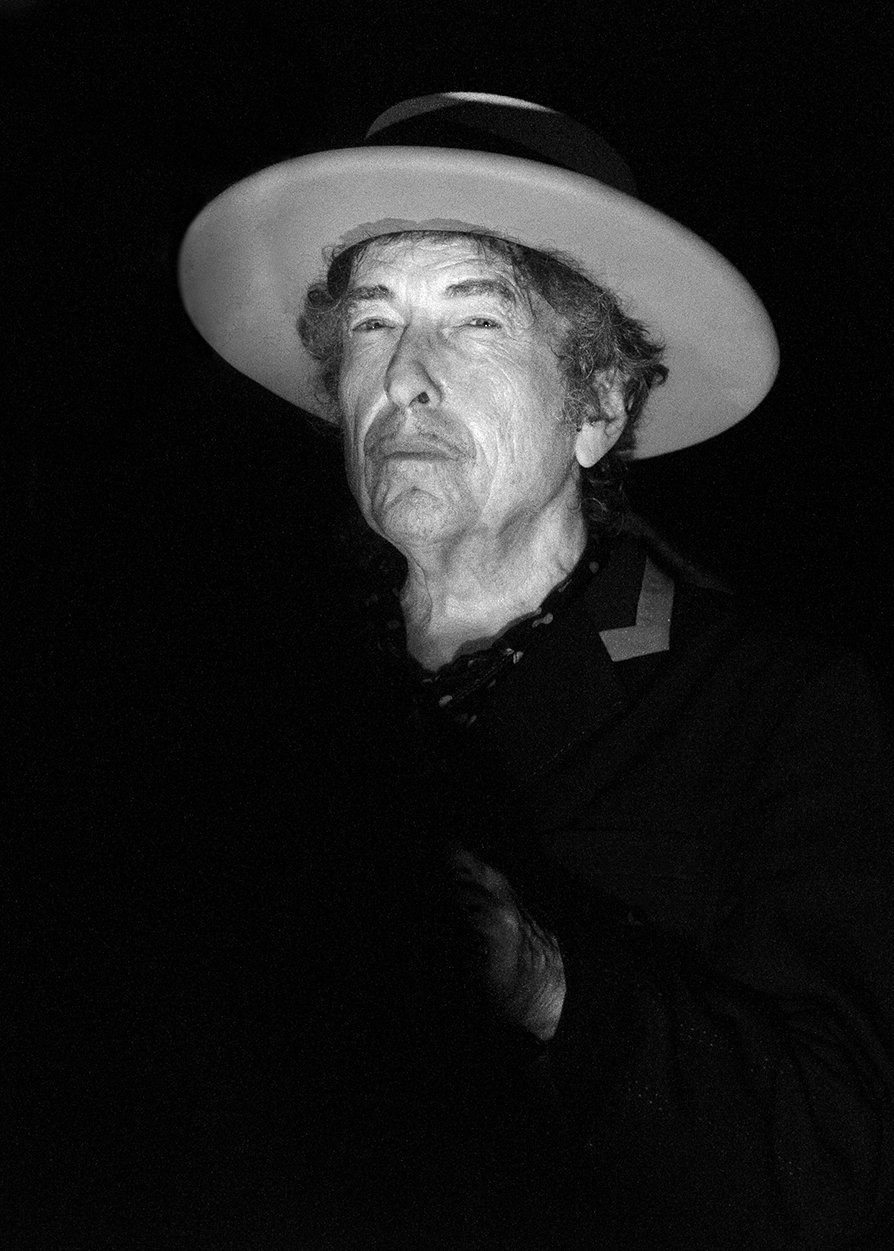
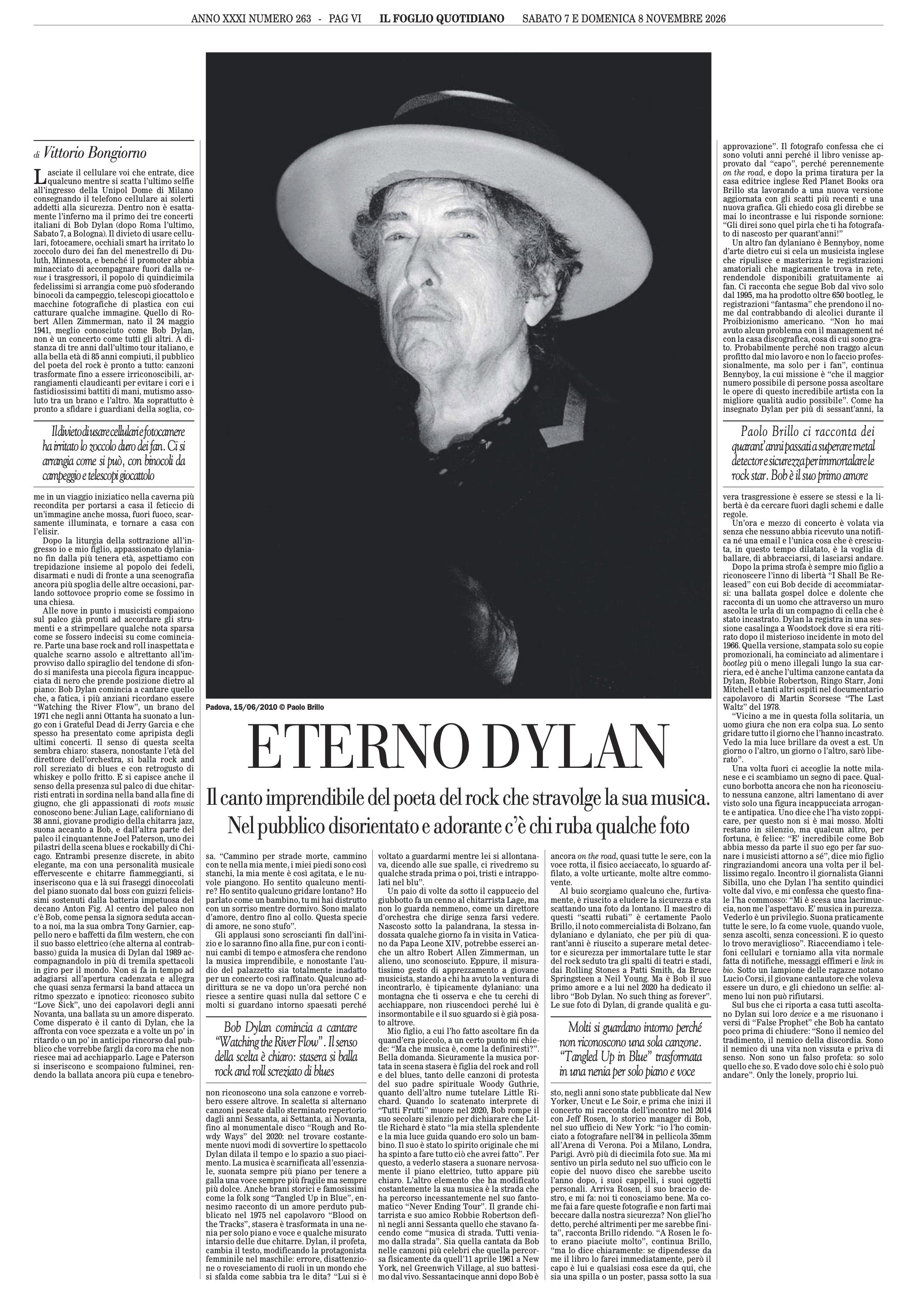
Padova 15.6.2010 © courtesy Paolo Brillo
by Vittorio Bongiorno
published in Il Foglio, November 7, 2026
“Abandon your phones, ye who enter here,” someone says as they snap one last selfie at the entrance to Milan’s Unipol Dome, handing their phone over to the diligent security guards. Inside, it’s not exactly hell, but it’s the first of Bob Dylan’s three Italian concerts (then Rome, and the last one on Saturday, the 7th, in Bologna). The ban on cell phones, cameras, and smart glasses has irritated the die-hard fans of the minstrel from Duluth, Minnesota, and although the promoter has threatened to escort violators out of the venue, the 15,000 loyal fans are making do as best they can, pulling out camping binoculars, toy telescopes, and plastic cameras to capture a few images. The concert by Robert Allen Zimmerman, born on May 24, 1941, better known as Bob Dylan, is unlike any other. Three years after his last Italian tour, and at the ripe old age of 85, the rock poet’s audience is ready for anything: songs transformed beyond recognition, limping arrangements designed to avoid sing-alongs and the infuriating clapping, and absolute silence between songs. But above all, they’re ready to challenge the guardians of the threshold, as if on a rite-of-passage journey into the deepest cave to retrieve the talisman of an image—even a blurry, grainy, or poorly lit one—and return with the elixir.
After the liturgy of subtraction at the entrance, my son—a Dylan fan since he was a toddler—and I wait with bated breath alongside the congregation, defenseless and exposed before a stage set even more bare than on other occasions, all of us speaking in hushed tones as if we were in a church.
At nine o’clock sharp, the musicians appear on stage, and strumming as if they were undecided about how to begin. An unexpected rock and roll backing track kicks in, along with a few sparse solos, and just as suddenly, from the opening in the backdrop curtain, a small figure hooded in black emerges and takes his place behind the piano: Bob Dylan begins to sing what the older folks, with some effort, recall as “Watching the River Flow,” a 1971 song he played extensively in the ’80s with Jerry Garcia’s Grateful Dead and which he has often used as the opener for his recent concerts. The meaning behind this choice seems clear: tonight, despite the conductor’s age, we’re dancing to rock and roll tinged with blues and with an aftertaste of whiskey and fried chicken.
And it also becomes clear why two guitarists—who quietly joined the band at the end of June and are well known to roots music fans—are on stage: Julian Lage, a 38-year-old Californian and former child prodigy of jazz guitar, plays alongside Bob, and on the other side of the stage is fiftysomething Joel Paterson, one of the pillars of the Chicago blues and rockabilly scene. Both are unassuming figures, dressed elegantly, yet with effervescent musical personalities and blazing guitars; they weave in and out of the loose-limbed piano phrasing played by the bandleader, with delightful flashes of brilliance, backed by the impetuous drumming of the veteran Anton Fig. In the center of the stage isn’t Bob, as the woman sitting next to us thinks, but his shadow, Tony Garnier—wearing a black hat and a mustache straight out of a Western movie—who, with his electric bass (which he alternates with the double bass), has been guiding Dylan’s music since 1989, accompanying him in more than 3,000 shows around the world. No sooner have we settled into the rhythmic and cheerful opening than, almost without pause, the band launches into a broken, hypnotic rhythm: I immediately recognize “Love Sick,” one of the masterpieces of the ’90s, a ballad about desperate love. Just as desperate is Dylan’s singing, as he tackles the song with a broken voice, sometimes slightly behind or slightly ahead of the beat, chased by the audience that wants to sing along but can never quite catch up. Lage and Paterson dart in and out in a flash, making the ballad even darker and more foreboding.
“I’m walking through streets that are dead, walking, walking with you in my head. My feet are so tired, my brain is so wired. And the clouds are weeping. Did I hear someone tell a lie? Did I hear someone’s distant cry? You thrilled me to my heart, then you ripped it all apart. You went through my pockets when I was sleeping. I’m sick of love… but I’m in the thick of it. This kind of love… I’m so sick of it”
The applause is thunderous from the very beginning and remains so until the end, even amid the constant shifts in tempo and atmosphere that make the music elusive, and despite the fact that the arena’s sound system is totally unsuitable for such a refined concert. Some people even leave after an hour because they can hardly hear anything from Section C, and many look around, bewildered, because they don’t recognize a single song and wish they were somewhere else. The setlist alternates between songs drawn from his vast repertoire spanning the ’60s, ’70s, and ’90s, all the way to the monumental 2020 album “Rough and Rowdy Ways”: by constantly finding new ways to subvert the performance, Dylan stretches time and space at will. The music is stripped down to its bare essentials, played ever more softly to keep an increasingly fragile, yet sweeter, voice afloat. Even historic and world-famous songs like the folk song “Tangled Up in Blue”— yet another tale of lost love, from the 1975 masterpiece “Blood on the Tracks”—are transformed tonight into a lullaby, a droning chant for solo piano and voice, with a few measured touches from the two guitars. Dylan, the prophet, changes the lyrics, switching the female protagonist to a male one: a mistake, an oversight, or a reversal of roles in a world crumbling like sand between one’s fingers?
“She turned around to look at me, as I was walkin’ away. I heard her say over my shoulder, We’ll meet again someday on the avenue. Tangled up in blue”
A couple of times, from beneath his hood, he gives a nod to guitarist Lage, but doesn’t even look at him—like a conductor leading an orchestra without being seen. Hidden beneath the hoodie—the same one he wore a few days ago during his visit to the Vatican to see Pope Leo XIV—there could very well be another Robert Allen Zimmerman, an alien, a stranger. And yet, according to those who’ve had the good fortune to meet him, this very measured gesture of appreciation toward the young musician is quintessentially Dylan-esque: a mountain that watches you and that you try, and fail, to grasp, because it is insurmountable, and its gaze has already moved elsewhere.
My son, whom I’ve had listening to this music since he was little, asks me at one point, “What kind of music is this? How would you describe it?” Good question. The music performed on stage tonight is undoubtedly a product of rock and roll and the blues—drawn as much from the protest songs of his spiritual father, Woody Guthrie, as from his other patron saint, Little Richard. When the wild performer of “Tutti Frutti” died in 2020, Bob broke his age-old silence to declare that Little Richard had been “my shining star and guiding light back when I was only a little boy. His was the original spirit that moved me to do everything I would do.” That’s why, watching him tonight play the electric piano with jittery energy, everything seems clearer. The other element that has constantly shaped his music is the path he has relentlessly traveled on his fabled “Never Ending Tour.” His friend, the great guitarist Robbie Robertson, described what they were doing in the 1960s as “street music. We all come from the street”—whether it’s the street sung about by Bob in his most famous songs or the one he physically traveled starting on April 11, 1961, in New York’s Greenwich Village, at his live baptism. Sixty-five years later, Bob is still on the road, almost every night, with a cracked voice, a battered body, and a sharp gaze—sometimes piercing, often moving.
In the dark, we spot someone who has managed to sneak past security and is taking a photo from a distance. The master of these “stolen shots” is undoubtedly Paolo Brillo, the well-known accountant from Bolzano, a devoted Dylanite, who for more than forty years has managed to bypass metal detectors and security to capture all the rock stars from his seat in the stands of theaters and stadiums—from the Rolling Stones to Patti Smith, from Bruce Springsteen to Neil Young. But Bob is his first love, and in 2020 he dedicated the book “Bob Dylan: No Such Thing as Forever” to him. His photos of Dylan—of exceptional quality and taste—have been published over the years by The New Yorker, Uncut, and Le Soir, and before the concert began, he told me about his 2014 meeting with Jeff Rosen, Bob’s longtime manager, in Dylan’s New York office: “I started photographing him in ’84 on 35mm film at the Verona Arena. Then in Milan, London, Paris. I must have over ten thousand photos of him. But I felt like a complete schmuck sitting in Bob’s office with copies of the new album that was set to come out the following year, his hats, his personal belongings. Rosen, his right-hand man, walked in and said to me, ‘We know you well. But how do you manage to take these photos without ever getting caught by our security?’ I didn’t tell him, because otherwise it would have been the end for me,” Brillo says with a laugh.
“Rosen really liked the photos,” Brillo continues, “but he makes it clear: ‘If it were up to me, I’d put the book out right away, but he’s the boss, and everything that comes out of here—whether it’s a pin or a poster—has to be approved by him.” The photographer admits that it took years for the book to be approved by “the boss”—who’s perpetually on the road—and after the first print run for the British publisher Red Planet Books, Brillo is now working on a new, updated version featuring his most recent shots and a new design. I ask him what he’d say to him if he ever met him, and he replies slyly: “I’d tell him, ‘I’m that schmuck who’s been secretly photographing you for forty years!’”
Another Dylan fan is Bennyboy, the stage name of an English musician who cleans up and masters the amateur recordings he magically finds online, making them available to fans for free. He tells us that he’s been seeing Bob live only since 1995, but he’s produced over 650 bootlegs—those “ghost” recordings that take their name from the bootlegging of alcohol during American Prohibition. “I’ve never had any problems with management or the record label, for which I’m grateful. Probably because I don’t make any profit from my work and I don’t do it professionally—only for the fans,” continues Bennyboy, whose mission is “for as many people as possible to be able to listen to the works of this incredible artist with the best possible audio quality.”
As Dylan has taught us for more than sixty years, true transgression is being yourself, and freedom lies outside the box and beyond the rules.
The hour-and-a-half concert flies by without anyone receiving a notification or an email, and the only thing that grows during that stretched time was the desire to dance, to embrace one another, to let loose.
After the first verse, it’s my son again who recognizes the anthem of freedom, “I Shall Be Released,” with which Bob decides to bid us farewell: a sweet and sorrowful gospel ballad about a man who, through a wall, hears the screams of a cellmate who’s been framed. Dylan recorded it during a home session in Woodstock, where he had retreated after his mysterious motorcycle accident in 1966. That version, released only on promotional copies, began to fuel the more or less illegal bootlegs throughout his career, and it is also the last song sung by Dylan, Robbie Robertson, Ringo Starr, Joni Mitchell, and many other guests in Martin Scorsese’s 1978 documentary masterpiece “The Last Waltz.”
“Now, yonder stands a man in this lonely crowd, a man who swears he's not to blame. All day long I hear him shouting so loud, Just crying out that he's been framed. I see my light come shinin', from the west down to the east. Any day now, any day now I shall be released”
Once outside, the Milanese night welcomes us, and we exchange a sign of peace. Some people are still grumbling that they didn’t recognize a single song; others complain that all they saw was an arrogant, unfriendly hooded figure. One person says he saw him limping, which is why he never moved. Many remain silent, but fortunately, a few others are happy: “It’s incredible how Bob set his ego aside to let the musicians around him shine,” says my son, thanking me once again for the wonderful gift. I run into journalist Gianni Sibilla, a guy who’s seen Dylan live fifteen times, and he confesses that this finale moved him: “A little tear rolled down my cheek—I didn’t expect it. It’s music in its purest form. Seeing him is a privilege. He plays practically every night, doing it his way, whenever he wants, without worrying about ratings, without making concessions. And I find that wonderful.” We turn our cell phones back on and return to normal life—made up of notifications, fleeting messages, and links in bios. Under a streetlight, some girls spot Lucio Corsi, who “wanted to be a tough guy,” as the title of his hit goes, and ask him for a selfie: at least he won’t say no.
On the bus taking us home, everyone is listening to Dylan on their devices, and the lyrics to “False Prophet”—which Bob sang just before closing—echo in my mind: “I’m the enemy of treason—the enemy of strife, I’m the enemy of the unlived meaningless life, I ain’t no false prophet—I just know what I know, I go where only the lonely can go.” Only the lonely—that’s him.
INNAMORARSI A BERLINO /
FALLING IN LOVE IN BERLIN /
by Vittorio Bongiorno
Published on Il Foglio, 17.10.2026
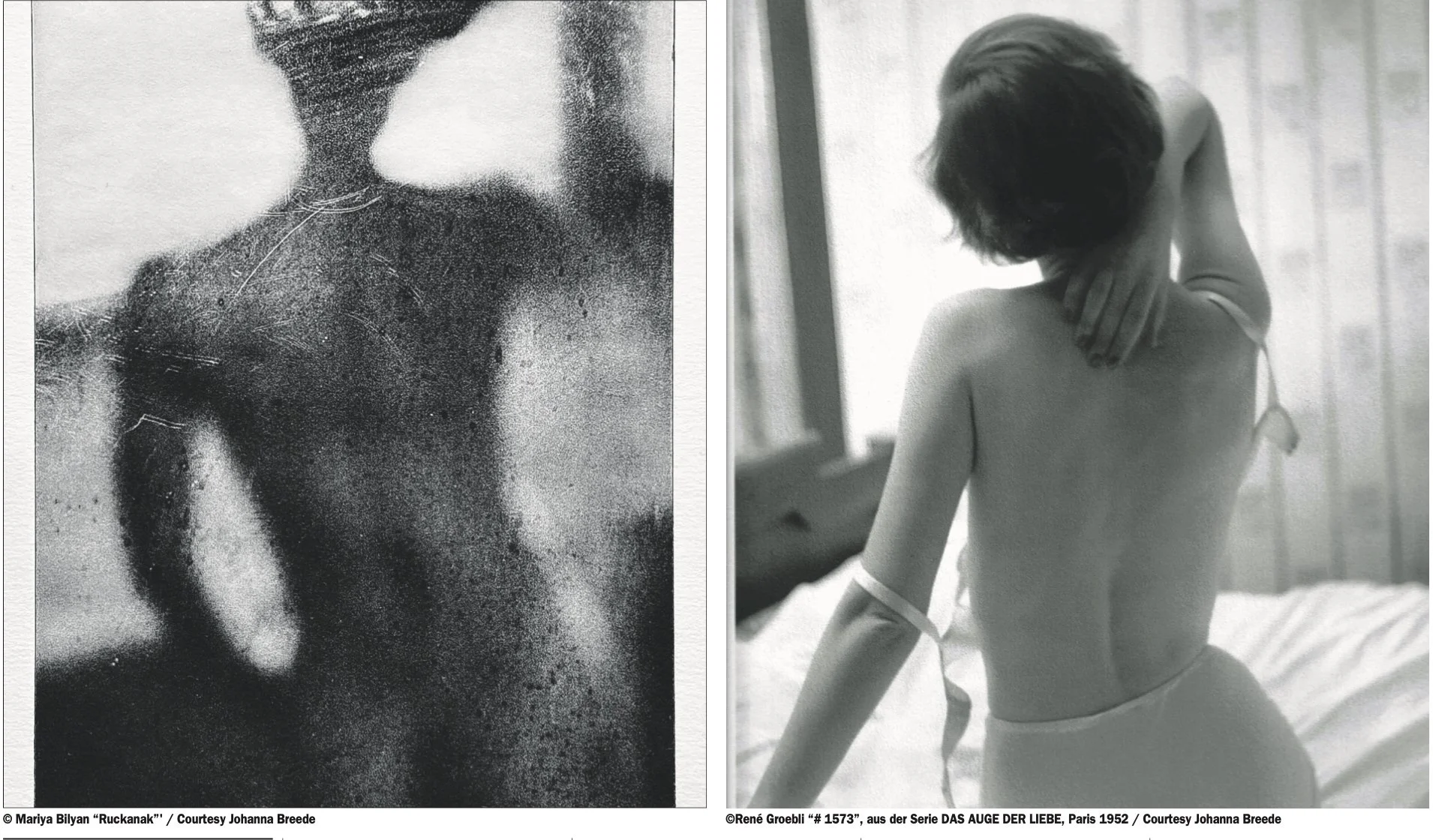
Is meeting someone in Berlin and falling in love love at first sight or a kind of chemical destiny? “Wahlverwandtschaften,” or elective affinities, are the dream behind a thirty-year-long photography exhibition that is finally taking shape through the work of twenty-four photographers—fourteen women and ten men—who, without ever meeting or knowing one another, captured the same image on different continents, in different eras, and in different styles. Welcome to Berlin, at Johanna Breede PHOTOKUNST, the internationally renowned gallery for high-quality black-and-white photography, where the hostess and curator has created diptychs of literary memory, inspired by Goethe’s novel of the same name.
“I found myself in the fortunate position of being able to play Memory for a long time,” the hostess confides to ‘Il Foglio’ with refined elegance in her Art Deco parlor at Fasanenstraße 69, in a Berlin lulled by late summer along the quiet avenues of Charlottenburg, just a few days after the recent electoral upheavals. The group exhibition “Elective Affinities,” on view through October 23, brings together a diverse array of photographers, including, among others, the Germans Miriam Tölke and Stefan Moses, the Ukrainian Mariya Bilyan, the Pole Marek Pozniak, the Algerian-Parisian Isa Marcelli, the American Sheila Rock, the Chinese Songwen Sun-von Berg, and the Japanese Ayako Takaishi, alongside two great masters who have passed away: Herbert List and Robert Lebeck. Also featured in the exhibition are the two filmmakers Ulrike Ottinger and Wim Wenders, with two photographs from 1985 taken in Beijing and Tokyo: the director of “Perfect Days” is present alongside his wife, Donata, as is the other Japanese photography duo, Koichiro and Machiko Kurita.
Johanna Breede recounts the early days of her career as head of the photography department at the Villa Grisebach auction house, where she remained for eight years, and the sense of wonder mixed with amazement at holding originals by the most important photographers of all time in her hands: “It was an exciting and formative experience. On my desk I had prints by Irving Penn, Saul Leiter, Imogen Cunningham, Steichen, Edward Weston, Renger-Patzsch, Ansel Adams, Cartier-Bresson, Dorothea Lange, and many others. I loved this work and would read between the lines of the photographs to discover affinities, and even then, the desire to create a dialogue among the subjects based on elective affinity had already emerged within me. When I later opened my small gallery, I carried that desire, that dream, with me. But sometimes I would sell a photograph, and as a result, I would be missing the pair needed to create a dialogue in the exhibition ‘Elective Affinities’.” Today, this secret dialogue unfolds with beauty and delicacy under the curious gaze of the cultured gallery owner, evoking gestures, shadows, and situations described in the novel of the same name, a masterpiece of German literature.
In 1808, Johann Wolfgang von Goethe—a great poet, writer, philosopher, and scientist—borrowed the concept of “elective affinity” from chemistry and alchemy, fields in which he was a leading scholar, to develop his theory of “Wahlverwandtschaften.” He thus described the uncontrolled and entirely random attraction that causes certain substances to break away from existing structures and recombine with others, driven by deeper and equally uncontrollable forces. Goethe is sixty years old, at the height of his artistic career, and—despite being married—he literally loses his head over the eighteen-year-old Wilhelmine Herzlieb, known as Minna: he first dedicates a series of sonnets to her, then even gives her a gold ring, but the girl rejects him with a certain detachment. The Master’s heart shatters, but it magically recovers through the creation of the novel, in which he recounts that impossible love by crafting the character of Ottilia—the ethereal orphaned niece, modeled, of course, on Minna.
In the novel, the young woman arrives at the country estate of Carlotta and Edoardo, and Edoardo falls madly in love with her; then Carlotta loses her heart to the Captain, who is also a guest at their estate. Just like chemicals that recombine, the two couples break up and come back together in a whirlwind of uncontrollable passion and tragedy.
It is well known that Goethe’s tumultuous love life always fueled his writing, and this relentless intertwining of love and death transformed ‘Elective Affinities’ into what Thomas Mann—another restless giant of German literature—called “our greatest novel, a miracle of compositional happiness and purity, astonishing in its richness of relationships, its intimate connections, and its cohesion.” For Mann, Goethe was more than a spiritual father—he was a constant presence throughout the career of a writer who explored the decadence and eroticism of the bourgeoisie like no other. And in Johanna Breede’s exquisitely composed diptychs, we find precisely this: contrasts, forms, light, and gestures that seem to respond to intangible yet very evident spiritual resonances, much like those described in the novel.
“A beautiful foot is a great gift from nature, a grace that never fades,” declares the Count with great emphasis. He is one of Edoardo’s guests, infatuated with the foot of Carlotta, Edoardo’s wife, whose little shoe he would like to kiss with devotion. Immediately, the gaze turns to the corner wall at the entrance to the PHOTOKUNST gallery, where Yuriko Takagi’s shoes—photographed for a Comme des Garçons advertisement in 1995—make a playful nod to Donata Wenders’s “Red Shoes” from 2009. And what about the graceful feminine nape photographed in Paris by René Groebli in 1952, which is reflected in another nape photographed by Donata Wenders fifty-three years later, in Japan?
Goethe’s novel opens with Edoardo and Carlotta grappling with the renovation of their estate’s park—with trees to be cut down and new plants to be added—a perfect metaphor for what the four characters—Edoardo and Carlotta, their niece Ottilia, and the Captain—will find themselves experiencing as their lives take on a new form. Goethe writes this in the opening lines of the novel: “To the right, the valley opens up, and once past the vast expanses of trees, the gaze is lost in a crystal-clear distance.”
With the same gaze focused on the purity of white, Johanna Breede must have juxtaposed the “Frozen Tree”—photographed in Norway by Jens Knigge in 2015—with the identical bare tree photographed by Koichiro Kurita in Japan in 1987. And again: re-reading the scene in which, returning from a walk near the old mill, Edoardo turns to look at Ottilia, who “followed him without fear or hesitation, leaping lightly and with perfect balance from stone to stone; it seemed to him as if he were seeing a celestial being hovering above him,” our gaze rests on the two photographic collages by Isa Marcelli (2021) and Miriam Tölke (2022) which, one in Paris and the other in Berlin, mysteriously and enchantingly give shape to the face of the same girl.
Those most surprised by these uncontrolled and uncontrollable elective affinities are the artists themselves. Mariya Bilyan describes the gallerist as “a magnet for like-minded artists; it was her brilliant eye that brought us all together so easily. “Today, that’s a rare occurrence.” Donata Wenders shares this view: “What a precious gift Johanna has given us!” says the German photographer of the gallery owner-alchemist’s work. “Finding my images—which I know so well—placed side by side like brothers and sisters with other photos by my colleagues was like meeting family members I hadn’t known before. What a joy and what a sense of belonging.”
Berlin-based artist Kathleen Alisch conveys the same feeling, thrilled to have her work displayed alongside that of Japanese photographer Koichiro Kurita: “It feels like an extension of my intense periods in Kyoto. Perhaps it’s a deeply rooted interplay between chance and intention, which ultimately brought us together in his darkroom in Japan and now on this wall.”
Chemistry and chance are the surprising paradox that underpins the entire exhibition: photography captures the moment—“there are only coincidences,” said Henri Cartier-Bresson in 1971—and yet it seems to have its own predestination. Very different photographic styles connect with one another not as chance encounters, but as if they already knew each other before meeting on Johanna Breede’s walls.
“In fact, for me, elective affinity is above all a dialogue within a completely unforeseen and unexpected situation,” adds Donata Wenders, “born of something that drew me in, that I couldn’t explain, and that I could never have planned in advance.” “Sometimes an image appears in my mind even before I encounter the subject in reality,” says the Paris-based Japanese photographer Ayako Takaishi, “it almost seems to me as if the photograph already existed before the moment I took it, as if time had folded in on itself for an instant.”
“When I started taking photographs,” says Isa Marcelli, “I realized right away that I wasn’t looking for technical perfection, but rather that I preferred the traces of a certain imperfection. I’m interested in the idea of vulnerability: we are unique and singular, but also fallible human beings. And when I take a photo, I’m no longer solely responsible—chance becomes my ally.”
Chance also plays a major role in the ink drawings of Songwen Sun-von Berg, who was born in Shanghai but lives in Berlin: “When I arrived at the opening, I was surprised to see my drawings next to the photos by Jens Knigge and Ayako Takaishi. I didn’t know them before, and all three of us had worked completely independently.” Jens Knigge also emphasizes how deep his connection to chance is, referring to his photograph taken on the frozen Lake Baikal in Siberia: “I was struck by the deep bond that the local population—predominantly Buddhist—forms with the lake’s waters. I photographed ice formations and abstracted the images by inverting their tones, thus creating space for free interpretation and imagination.”
Time and space, therefore, break down and reassemble on the walls of Johanna Breede’s gallery, and the photographic memory of these extraordinary artists now becomes a collective unconscious—one that cannot be controlled or planned.
And during the very same days when photographers who have never met are drawn to one another, two musicians from vastly different backgrounds also experience an equally uncontrollable elective affinity that produces music perfect as the ideal soundtrack for this dreamlike exhibition: Anushka Chkheidze and Robert Lippok, she 29, he 60, are releasing their second collaborative album, “The Sky Was Out of Tune,” a dreamlike 25-minute piece published by the prestigious Morr Music label.
“It was composed for the Festival of the Future at the Neue Nationalgalerie in November 2025,” says Lippok, “we wanted to create something dense yet unstable, in which noise, harmonies, and melodies would coexist, yet each would retain its own identity.” Anushka Chkheidze, born in Tbilisi, Georgia, is considered one of the most promising talents on the contemporary Caucasian music scene, while Robert Lippok has written some of the most significant chapters in Berlin’s musical history: together with his brother Roland, while they were still living in the former GDR, he created that wild sonic blend of electronic, post-rock, and ambient music, first with the duo “Ornament und Verbrechen”—named after the title of the famous essay written in 1908 by architect Adolf Loos—and later with the brilliant To Rococo Rot.
“We met in Tbilisi in 2019, during an improvisation session at an ambient music workshop. Anushka played the piano, and within a minute, I knew I wanted to work with her. The clarity, simplicity, and beauty of the chords and melodies she played immediately touched my heart,” says Lippok, as we stroll through the intersection of Kreuzberg and Neukölln—the two most creative and multicultural neighborhoods in this city that never seems to sleep.
For him, too, the image Goethe borrows from chemistry fits perfectly with his conception of music: “The collaboration with Anushka was completely unplanned, and yet from the moment we started, it seemed inevitable, as if our sounds already knew each other in some way before they met. That’s why I hold dear the phrase by Donna Haraway (the American feminist theorist, ed.) ‘make kin’—to create kinships, alliances, and mutual responsibility.”
The “Elective Affinities” showcased by Johanna Breede reveal the wondrous enigma of connections between human beings, just like the music produced by Chkheidze and Lippok. And, as Goethe writes in the final pages of his novel: “If one of the two had been confined to the far end of the house, the other, instinctively, without meaning to, would have gradually drawn closer to him. Life was an enigma to them, the solution to which they could find only together.”
https://photography-now.com/exhibition/178511
I SERENISSIMI DI SICILIA. /
THE VENETIANS OF SICILY /
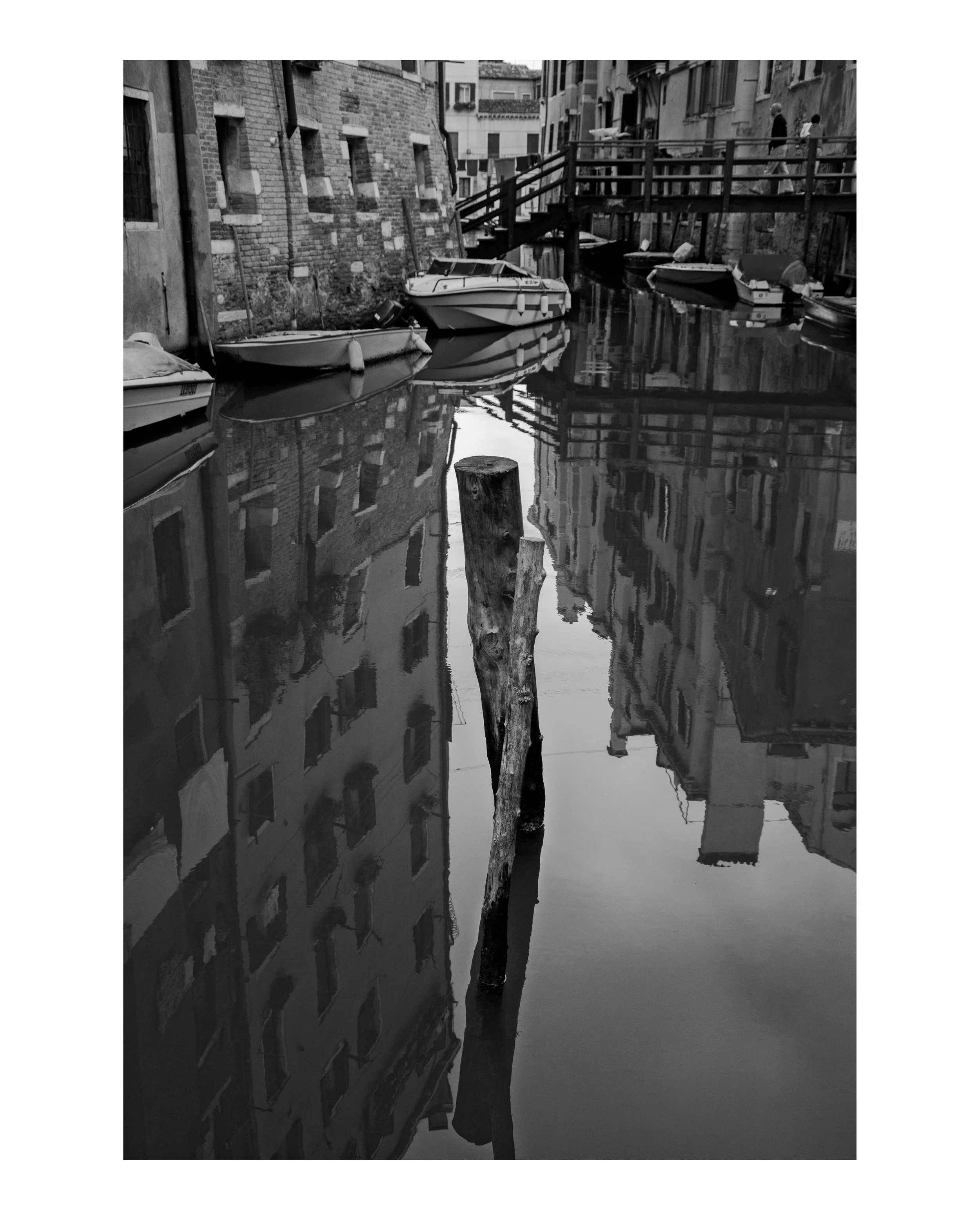
photo courtesy of Ferdinando Scianna
published by Il Foglio, 5.9.2026
Scianna and Emma Dante with Buttafuoco in Venice: photography and theater in a city whose history has never grown old
by Vittorio Bongiorno
Venice is a mirror, a fish when viewed from above, and so the best way to arrive would be from the sea, as Thomas Mann suggested. It’s almost as if arriving in the lagoon city were an experience, a rite, rather than a stop on a tourist itinerary: water, a primordial tangle of islands, gold, embroidery, stones smoothed by the waves, fierce seagulls, and shadows concealing destinies. In this port city—a sweet and bewitching trap, foul-smelling yet resplendent—three wandering Sicilians have landed: travelers and voluntary exiles, not for tourism but for work, for an award, for government service: Ferdinando Scianna, Emma Dante, and Pietrangelo Buttafuoco. The first with an exhibition on the Jewish Ghetto, right inside the Campo del Ghetto Nuovo; Emma Dante, who received the Golden Lion for Lifetime Achievement at the start of the summer; and Buttafuoco, who is the skilled helmsman of this Biennale—theater, dance, music, architecture, art, and cinema.
Three different destinations, three different ways of losing oneself in Venice—loving it and being loved by it, each in their own way. All while remaining faithful to a single island, Sicily, which, as Buttafuoco suggests, «has never known the narrow-minded logic of a cramped courtyard because, like Venice, it too has always been in the middle of the sea.»
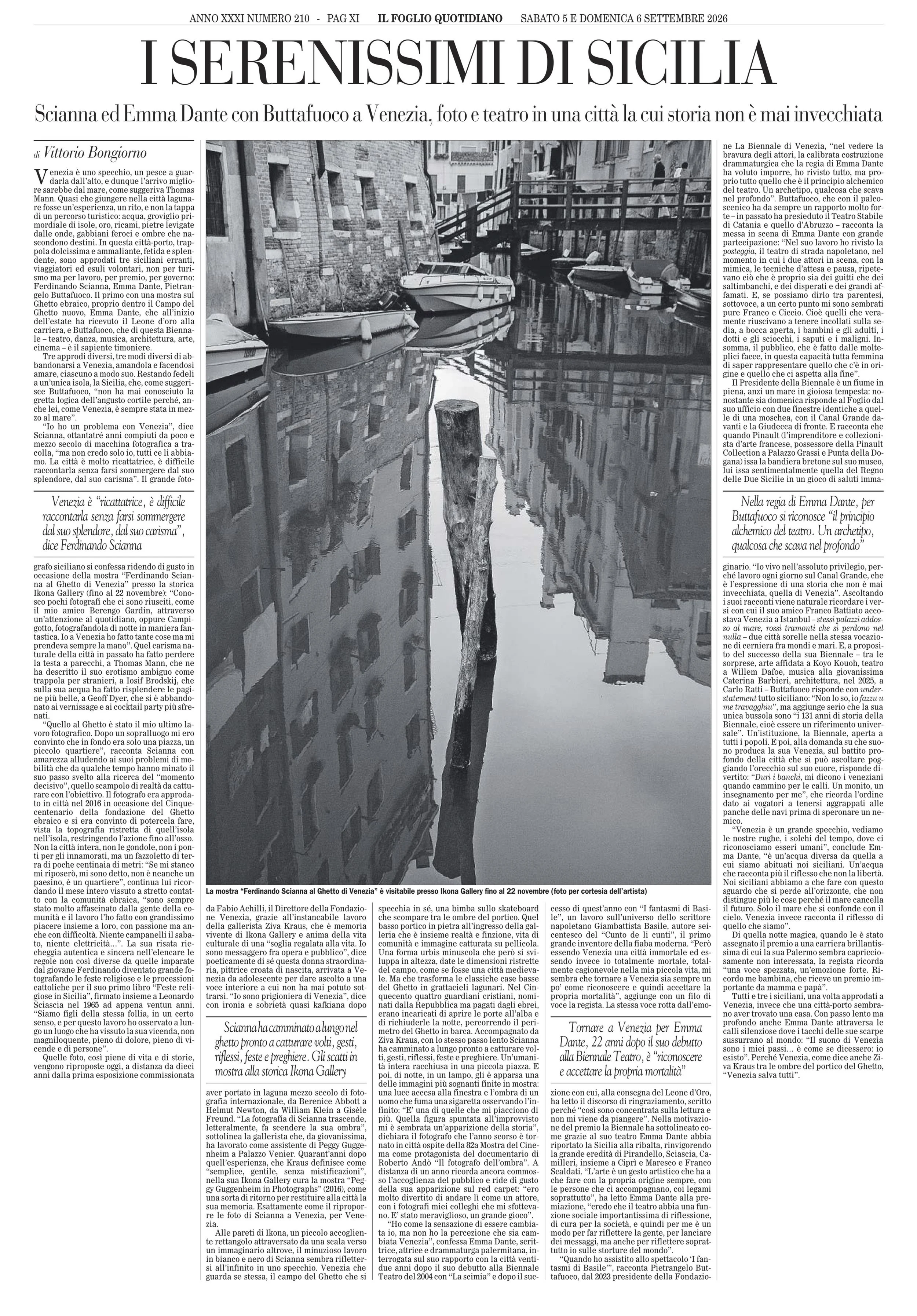
«I have a problem with Venice», says Scianna, who recently turned 83 and has been carrying a camera slung over his shoulder for half a century, «but I don’t think I’m the only one—we all do. The city is very demanding; it’s hard to capture it without being overwhelmed by its splendor, by its charisma». The great Sicilian photographer confesses with a hearty laugh on the occasion of the exhibition “Ferdinando Scianna at the Venice Ghetto” at the historic Ikona Gallery (through November 22): «I know few photographers who’ve managed it—like my friend Berengo Gardin, through his focus on the everyday, or Campigotto, who photographed it at night in a fantastic waywho photographed it brilliantly at night. I’ve done a lot of things in Venice, but I always got carried away». That natural charisma of the city has made many lose their heads in the past—Thomas Mann, who described its ambiguous eroticism as a trap for foreigners; Iosif BrodskijJoseph Brodsky, who made his most beautiful pages shine on its waters; and Geoff Dyer, who indulged in the wildest vernissages and cocktail parties.
«The project in the Ghetto was my last photographic workmy latest photographic work. After a site visit, I had convinced myself that, deep down, it was just a square, a small neighborhood», Scianna says with bitterness, alluding to his mobility issues, which for some time have hampered his brisk pace in pursuit of the ‘decisive moment’—that fleeting glimpse of reality to be captured through the lens. The photographer had arrived in the city in 2016 for the 500th anniversary of the founding of the Jewish Ghetto and was convinced he could pull it off, given the confined topography of that “island within an island,” by narrowing his focus down to the bare essentials. Not the entire city, not the gondolas, not the bridges for lovers, but a tiny patch of land just a few hundred meters wide: «If I get tired, I’ll rest, I told myself, it’s not even a small village—it’s a neighborhood», he continues, recalling the entire month he spent in close contact with the Jewish community. “I’ve always been deeply fascinated by the people of the community, and I carried out this work with them with great pleasure—with passion, but also with difficulty. No doorbells on Saturdays, no electricity….» His laughter rings out, genuine and sincere, as he lists the rules—not so different from those learned by the young Ferdinando, who came of age photographing religious festivals and Catholic processions for his first book, “Religious Festivals in Sicily”, co-authored with Leonardo Sciascia in 1965 when he was just twenty-one years old.
«We are children of the same madness, in a sense, and for this project I spent a long time observing a place that has lived through its own story—one that is not grandiose, but full of pain, full of events and people».
Those photos, so full of life and stories, are being presented again today—ten years after the first exhibition commissioned by Fabio Achilli, Director of the Fondazione Venezia—thanks to the tireless work of gallery owner Ziva Kraus, who is the living memory of Ikona Gallery and the soul of the cultural life of a “threshold gifted to life.a “threshold gifted to life.” «I am a messenger between the artwork and the public», says this extraordinary woman poetically of herself—a Croatian-born painter who arrived in Venice as a teenager to heed an inner voice she could never escape. «I am a prisoner of Venice», she says with irony and an almost Kafkaesque sobriety after having brought half a century of international photography to the lagoon, from Berenice Abbott to Helmut Newton, from William Klein to Gisèle Freund. «Scianna’s photography transcends—literally—it casts its shadow», emphasizes the gallery owner, who, as a young woman, worked as Peggy Guggenheim’s assistant at Palazzo Venier.
Forty years after that experience—which Kraus describes as «simple, gentle, and free of pretense»—she curated the exhibition “Peggy Guggenheim in Photographs (2016)” at his Ikona Galleryat her Ikona Gallery, as a sort of homecoming to restore the city’s memory. Just as the presentation of Scianna’s photos in Venice is for Venice.
On the walls of Ikona—a small, cozy rectangle traversed by a staircase leading to an imaginary elsewhere—Scianna’s meticulous black-and-white work seems to reflect endlessly in a mirror. Venice gazing at itself, the Ghetto square mirrored within itself, a little girl on a skateboard disappearing into the shadows of the portico. That low stone portico at the gallery’s entrance is both reality and fiction, community life and an image captured on film. A minuscule forma urbis that nevertheless rises upward, given the Ghetto’s confined dimensions, as if it were a medieval city. Yet it transforms the Ghetto’s classic low-rise houses into lagoon-side skyscrapers. In the sixteenth century, four Christian guards—appointed by the Republic but paid by the Jews—were tasked with opening the gates at dawn and closing them at night, patrolling the perimeter of the Ghetto by boat.
Accompanied by Ziva Kraus, Scianna walked for a long time at the same slow pace, ready to capture faces, gestures, reflections, celebrations, and prayers. An entire humanity encapsulated in a small square. And then, at night, in a flash, one of the most dreamlike images in the exhibition appeared before him: a light on in a window and the shadow of a man smoking a cigarette as he gazed into the infinite: «It’s one of my favorites. That figure that suddenly appeared seemed to me like an apparition from history», says the photographer, who returned to the city last year as a guest of the 82nd Venice Film Festival, starring in Roberto Andò’s documentary “Il fotografo dell’ombra” (“The Photographer of Shadows”). A year later, he still recalls with emotion the audience’s reception and laughs heartily at his appearance on the red carpet: «I was really amused to be there like an actor, with my fellow photographers teasing me. It was wonderful—a great bit of fun»It was wonderful—great fun».
«I feel as if I’ve changed, but I don’t feel that Venice has changed», confesses Emma Dante, a writer, actress, and playwright from Palermo, when asked about her relationship with the city twenty-two years after her debut at the 2004 Theater Biennale with “La scimia” and following this year’s success with “I fantasmi di Basile”, a play exploring the world of the Neapolitan writer Giambattista Basile, the 17th-century author of “Cunto de li cunti” and the first great inventor of the modern fairy tale. «But since Venice is an immortal city and I, on the other hand, am utterly mortal, utterly frail in my little life, it seems to me that returning to Venice is always a bit like acknowledging—and therefore accepting—one’s own mortality», the director adds in a whisper. It was the same voice, choked with emotion, with which she read her acceptance speech at the Golden Lion ceremony—a speech she had written so that «I can focus on reading it and won’t start crying». In its citation for the award, the Biennale emphasized how, through her theater, Emma Dante has brought Sicily back into the spotlight, reinvigorating the great legacy of Pirandello, Sciascia, and Camilleri, along with Ciprì, Maresco, and Franco Scaldati.
«Art is an artistic gesture that is always connected«Art is a creative gesture that is always connected to its origins, to the people who accompany us, and above all to the bonds that tie us together», Emma Dante read at the awards ceremony. «I believe that theater has a very important social function—one of reflection and care for society—and so, for me, it is a way to make people think, to convey messages, but also, above all, for me personally to reflect on the injustices of the world».
“When I attended the performance«When I attended the performance of “I fantasmi di Basile”», says Pietrangelo Buttafuoco, president of the Venice Biennale Foundation since 2023, «in witnessing the actors’ skill and the carefully calibrated dramatic structure that Emma Dante’s direction sought to establish, I saw once again everything—absolutely everything—that constitutes the alchemical principle of theater. An archetype, something that delves deep». Buttafuoco, who has always had a very strong connection to the stage—he previously served as president of the Teatro Stabile di Catania and the Teatro Stabile d’Abruzzo—speaks of Emma Dante’s production with great enthusiasm: «In her work, I saw echoes of the ‘posteggia,’ Neapolitan street theater, in the moment when the two actors on stage, through mimicry and techniques of waiting and pause, reenacted what is characteristic of both street performers and acrobats, as well as the desperate and the starving. And, if we may say so in passing, under our breath, at one point they even reminded me of Franco and Ciccio. That is, the ones who truly managed to keep everyone glued to their seats, mouths agape—children and adults, the learned and the simple-minded, the know-it-alls and the maliciousthe know-it-alls and the mischievous. In short, the audience—made up of so many different faces—is captivated by this uniquely feminine ability to portray what lies at the origin and what awaits us in the end».
The President of the Biennale is a raging river—or rather, a sea in a joyful storm: even though it’s Sunday, he answers questions for “Il Foglio” from his office, which has two windows identical to those of a mosque, with the Grand Canal in front and the Giudecca across the way. And he recounts that when Pinault (the French entrepreneur and art collector, owner of the Pinault Collection at Palazzo Grassi and Punta della Dogana) raises the Breton flag over his museum, he sentimentally raises that of the Kingdom of the Two Sicilies in an imaginary exchange of greetings. «I live in absolute privilege, because I work every day on the Grand Canal, which is the embodiment of a history that has never grown old—that of Venice». Listening to his stories, it comes naturally to recall the verses with which his friend Franco Battiato compared Venice to Istanbul—the same palaces right on the sea, red sunsets that fade into nothingness—two sister cities sharing the same calling as a bridge between worlds and seas.
And, speaking of the success of his Biennale—among the surprises: art curated by Koyo Kouoh, theater by Willem Dafoe, music by the very young Caterina Barbieri, and architecture, in 2025, by Carlo Ratti—Buttafuoco responds with typical Sicilian understatement: «I don’t know, fazzu u me travagghiu, I just do my job» but he adds seriously that his only guiding principle is «the Biennale’s 131 years of history—that is, being a universal point of reference». The Biennale is an institution open to all peoples. And then, when asked what sound his Venice produces—the deep pulse of the city that can be heard by pressing one’s ear to its heart—he replies with a smile: «Duri i banchi», the Venetians tell me as I walk through the «“Duri i banchi,” the Venetians tell me as I walk through the calli. A warning, a lesson for me», which recalls the order given to rowers to hold fast to the benches of their ships before ramming an enemy.
«Venice is a great mirror; we see our wrinkles, the furrows of time, where we recognize ourselves as human beings», concludes Emma Dante, «it’s a different kind of water from what we Sicilians are used to. A water that speaks more of reflection than of freedom.It’s water that speaks more of reflection than of freedom. We Sicilians are accustomed to this gaze that is lost on the horizon, which no longer distinguishes things because the sea erases the future. Only the sea that blends into the sky. Venice, on the other hand, reflects who we are».
Of that magical night, when she was awarded a prize for a brilliant career—one in which her native Palermo seems, for some reason, uninterested—the director recalls «a choked voice, a powerful emotion. I remember myself as a child, receiving an important award from Mom and Dad».
All three Sicilians, once they arrived in Venice, seem to have found a home rather than just a port city. With slow but deliberate steps, Emma Dante, too, walks through the silent streets where the heels of her shoes whisper to the world: «The sound of Venice is my footsteps… it’s as if they were saying: I exist». Because Venice, as Ziva Kraus also says amid the shadows of the Ghetto’s portico, «Venice saves everyone».